
 Two weeks ago, the Labor Party lost the Australian elections. The polls got it wrong, as did many of the Labor politicians and their voters who expected a clear victory. No doubt the party had been brave in the clear transmission of their policies, but it would seem that they misjudged the nature of the Australian electorate at this point in time.
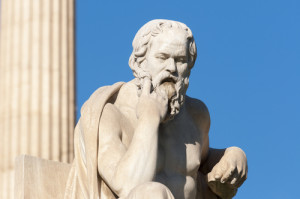
Facing Socrates
My interest here is not in the politics of this situation, I could find plenty to criticise in all the political parties. What interests me is how some of the Labor politicians and many of the people who supported them, are reacting to this loss. Much like Hillary Clinton and the Democrats, many of them blame the electorate for having gotten it wrong. As it is the voters who have the absolute power when it comes to putting in governments, it would seem an exercise in futility to blame them for getting it wrong. Mature leaders would want to start with questioning themselves, what did they misinterpret, what part of the reality in which they operate did they not see? Do they need to revisit some of their values, their interpretations and their assumptions? Could they face Socrates in the market place of Ancient Athens and answer his questions in a sincere pursuit of the truth, or would they answer with some clever sophist response that avoided all personal responsibility?
No doubt, Social Media, with its algorithms that group like-minded people together into comfortable gangs in which everybody agrees with each other, helps people avoid the discomfort of a virtual conversation with Socrates. Reading the same papers whose journalists have the same views as you, likewise does not prepare you for questioning yourself after an unexpected failure. True learning only comes from engaging with people who have different perspectives, and truly listening to what they have to say.
All organisations need to question like Socrates
In business too, there is a lack of critical thinking. In too many senior management teams the arrogance of some leaders, based on past successes, make it difficult to question their analysis of the current situation or entertain the merits of other peoples’ ideas. Ask yourself the following questions:
- When was the last time you questioned your values?
- When did you last actively engage with people who see things differently to you?
- Do you listen to others with an open heart?
- How would you fare in a face to face with Socrates?
Organisations need to actively practice critical thinking, seek out different interpretations and protect people who have the courage to question the Status Quo.
How does your organisation fare in this?
 I must admit to being disillusioned with the press today. The difficulty to be financially viable has made the newspapers abandon the rigor they once honoured. So often, what you read is not based on fact, nor reflects a writer who values truth. It seems that few journalists invest the time to check the veracity of their sources. Social media is, of course, even worse.
 Many people rate Roosevelt the greatest leader of the 20th Century. What made him so great. There are many answers to this questions but let me tell you about just one of them.
 The recent terrorist attacks in Brussels and Paris and the disturbances on New Year’s Eve in Cologne show that there are real problems in Europe around the integration of their immigrants. Many Europeans have a romantic view of their past in which they long for a time in which everyone in their countries lived together in peace and harmony in a perfectly integrated Utopia. However serious historians know that this perfect past never really existed. As
  A little while ago I had one of those coaching sessions in which I felt that I was trying to breach a fortress with a battering ram, and I can tell you three hours shoving the battering ram is pretty tiring.

 eral government in Australia has been unable to get their budget passed. Opposition in the Senate, ridicule from the opposition and general dismay by the Australian people has meant that there has not been the necessary support to execute the changes that the budget tried to achieve.